Executive Summary for Business Leaders
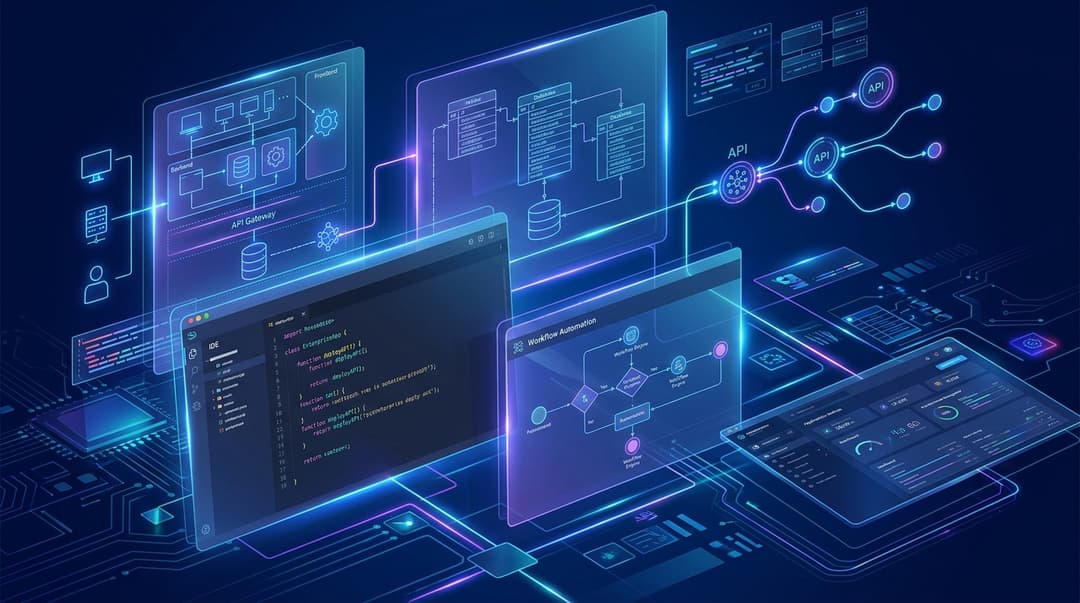
India’s Digital Personal Data Protection (DPDP) Act, 2023 has permanently changed digital business standards. Data privacy is no longer just legal text—it is an engineering requirement. Businesses that run legacy, unmaintained websites with unsecured contact forms face severe reputational, legal, and operational risks. Modernizing your tech stack with Privacy by Design, decoupled web architectures, and strict role-based access controls protects your business while dramatically improving client conversion rates.
Introduction: The Shift in India's Digital Landscape
Over the past decade, Indian businesses have undergone an unprecedented digital expansion. A multi-specialty hospital in Jabalpur now coordinates appointments through an online portal; a manufacturing enterprise in Pune collects vendor RFQs via web forms; an education institution in Bhopal processes admissions through custom student portals; and B2B SaaS startups in Bengaluru ship code daily to serve international markets.
Yet, behind this rapid wave of digital transformation lies an uncomfortable reality: the vast majority of business websites and software tools were built in an era of casual data collection.
For years, standard practice was to assemble a website using quick off-the-shelf templates, pack it with unvetted plugins, add bloated third-party trackers, and store incoming customer leads in unencrypted database tables or shared spreadsheets. If customer data leaked, it was quietly swept under the rug.
The enactment of the Digital Personal Data Protection (DPDP) Act in India has brought an end to that casual era. Privacy, security, and consent are now core engineering requirements that must be baked directly into your website's architecture, your customer database, your employee access controls, and your business software.
Why Every Business Should Care About Data Privacy
When executives hear about data privacy, their initial reaction is often to ask about statutory penalties. While the DPDP Act introduces severe financial penalties—up to ₹250 crore for significant data breaches and failure to take reasonable security safeguards—focusing strictly on fines misses the bigger commercial picture.
The true cost of insecure digital infrastructure is measured in commercial loss:
- Enterprise Procurement Gatekeeping: If you sell B2B services, custom manufacturing, logistics, or software, your corporate clients now conduct stringent security reviews. Enterprise procurement departments routinely reject vendors whose public websites have insecure forms, missing SSL configurations, leaked admin subdirectories, or vague data handling processes.
- Customer Churn and Reputational Damage: In the digital age, a single leaked database or an unsecured lead capture form can destroy years of brand goodwill. When clients discover that their confidential phone numbers, medical consultation queries, financial balance sheets, or identity documents are exposed on an unindexed server directory, they don't ask for apologies—they switch to a competitor.
- Operational Disruption from Automated Scrapers: Unsecured contact forms and outdated content management systems (CMS) do not just expose data; they invite malicious bots, automated SQL injection attempts, and ransomware probes. An unmaintained website can quickly become an attack vector into your internal email systems and internal network.
What is the DPDP Act? A Clear, Jargon-Free Guide
To engineer secure websites and digital tools, business leaders and product owners do not need a law degree. They need an engineering-first mental model of how the law structures personal data.
At its core, the Digital Personal Data Protection Act, 2023 governs digital personal data within India and applies to data processed outside India if offering goods or services to Indian citizens.
| DPDP Concept | Plain English Meaning | Real-World Business Example |
|---|---|---|
| Data Principal | The individual whose personal data is collected. | Your website visitor, clinic patient, student, or client. |
| Data Fiduciary | Your business entity collecting & determining data purpose. | Your company, hospital, manufacturing firm, or agency. |
| Purpose Limitation | Data can only be used for the exact reason collected. | Inquiry form contact info cannot be resold to brokers. |
| Notice & Consent | Clear, itemized notice in simple plain language. | Transparent micro-notice above the form submit button. |
| Security Safeguards | Reasonable technical safeguards to prevent breaches. | HTTPS/TLS 1.3, encrypted database, least-privilege RBAC. |
| Right to Erasure | Users can request deletion once purpose is served. | A simple, automated workflow to delete old client leads. |
Common Website Mistakes Businesses Make Every Day
Across hundreds of legacy business websites and custom portals, we repeatedly witness the same fundamental vulnerabilities. These mistakes rarely stem from bad intent; they stem from outdated web development practices:
- Transmitting Contact Forms in Plaintext Over Insecure Endpoints: Many older websites still feature contact forms that submit data over unencrypted HTTP or use deprecated PHP mailer scripts that lack CSRF (Cross-Site Request Forgery) protection. A malicious actor on the same local network can intercept names, phone numbers, and internal inquiries in clear text.
- Dumping Leads into Unsecured Shared Google Sheets: To simplify lead tracking, thousands of businesses connect their website forms directly to unauthenticated webhooks that populate open Google Sheets. Anyone with the link—former employees, contractors, or unauthorized staff—retains unrestricted access to the company’s entire historical customer list.
- Accumulating 40+ Unvetted Plugins on Legacy Monolithic CMSs: Traditional monolithic content management systems rely on a patchwork of third-party plugins for SEO, contact forms, social sharing, and security. Every unmaintained plugin introduces an attack surface. When a plugin author abandons an extension, vulnerabilities remain unpatched for years.
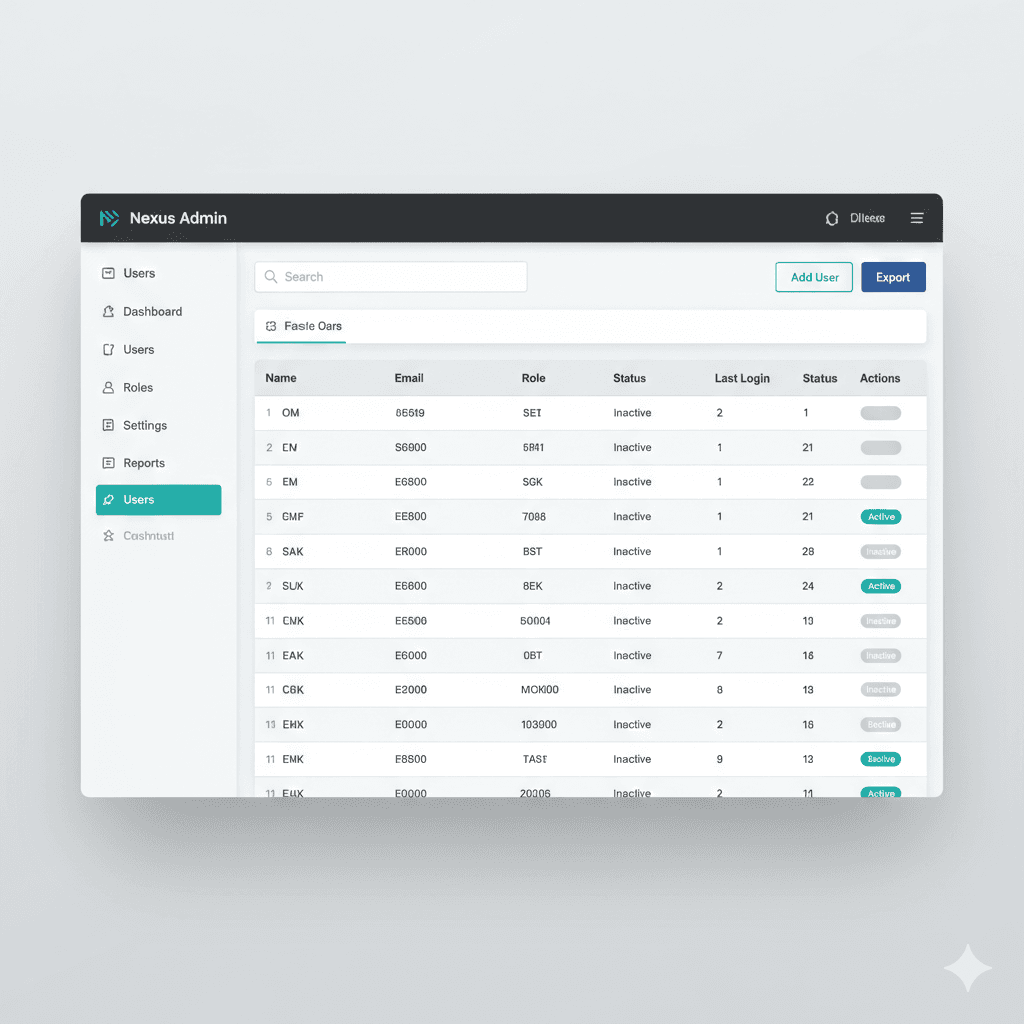
- Absence of Role-Based Access Control (RBAC): In many mid-sized companies, every internal user logs into the backend admin dashboard using a shared super-admin credential. Marketing interns, support reps, and external contractors can view, export, or accidentally delete proprietary customer records because permissions are not segmented.
- Indefinite Data Hoarding: A common habit among legacy businesses is keeping every inquiry, email, and CV submitted since 2017 indefinitely on their production web server. Under modern data protection principles, retaining personal data past its operational necessity without business justification significantly inflates breach exposure.
How Modern Websites Should Handle Customer Data
Building a modern, privacy-first website is not about cluttering the screen with annoying popups. It is about implementing a frictionless, transparent data pipeline that respects user autonomy while improving conversion quality.
1. Transparent Micro-Notices Near Form Inputs
Instead of hiding data disclosures inside a 30-page legal document nobody reads, modern websites utilize clean micro-copy directly beneath form buttons:
“We only use your contact details to provide your project estimate and technical roadmap. We never share or sell your data. View our Privacy Policy.”
This direct communication immediately reduces user hesitation and increases form conversion rates.
2. Separation of Contact Inquiries from Internal Storage
Modern architectures do not store customer leads directly on the publicly facing web server. When a user submits an inquiry on a high-speed Next.js website, the payload is sent through an isolated, authenticated API endpoint that sanitizes the inputs, performs rate-limiting checks, and transfers the data directly to an encrypted database behind a private Virtual Private Cloud (VPC).
3. Purpose-Driven Data Minimization
Stop asking for data you do not need. If you run a web design inquiry form, do you genuinely need the customer’s home address, fax number, and date of birth? Every extraneous data field you eliminate reduces user friction, improves form completion rates, and decreases your regulatory storage liability.
Technical Features Every Business Website Must Have
To reach modern standards of security, performance, and trust, your business website should include the following core technical features:
🔒 HTTPS with Strict HSTS
Enforce TLS 1.3 encryption across all URIs. Configure HSTS headers so browsers reject any insecure HTTP connections automatically.
⚡ Decoupled Next.js Architecture
Static pre-rendering eliminates public database exposure. No vulnerable PHP plugins or monolithic CMS attack vectors.
🛡️ Content Security Policy (CSP)
Restrict which scripts, fonts, and stylesheets can execute in the browser. Neutralizes Cross-Site Scripting (XSS) and unauthorized iframe hijacking.
👥 Role-Based Access Control (RBAC)
Enforce the Principle of Least Privilege across internal dashboards and portals. Sales, support, and admin roles remain strictly segregated.
Privacy by Design Explained: From Slogan to Code
Privacy by Design (PbD) is an engineering methodology where data protection, access controls, encryption, and minimization are engineered directly into the software's foundational architecture from day one, rather than added as an afterthought after software launch.
When you commission custom software development or launch a SaaS MVP platform, Privacy by Design ensures:
- Proactive, not reactive: Anticipating vulnerabilities before code reaches production servers.
- Privacy as default: Users do not need to hunt through settings to protect their phone numbers or email addresses.
- Full lifecycle data protection: Secure transmission in transit (TLS 1.3), encryption at rest (AES-256), and automated deletion routines when accounts are closed.
Why Legacy Websites Are Ticking Liabilities
Many businesses operate on the philosophy: “Our website was built eight years ago, but it still displays our phone number, so why change it?”
A legacy website is not an inert billboard; it is dynamic software executing code on a live web server exposed to the global internet 24 hours a day, 365 days a year.
Web servers running outdated runtimes (such as deprecated PHP 5.6 or 7.0 environments) harbor known, publicly cataloged Common Vulnerabilities and Exposures (CVEs). Automated botnets continuously scan IP ranges for these exact signatures, silently injecting backdoors, cryptominers, or malware into your web directories without triggering visible changes to your homepage.
Furthermore, Google's automated crawlers detect compromised scripts and immediately flag domains with search warnings: “This site may be hacked.” Recovering your organic rankings and brand authority after domain blacklisting can take months of painful remediation.
How AI & Automation Can Improve Secure Workflows
Artificial Intelligence and automation are transforming how modern businesses handle sensitive operational workflows. When architected responsibly, AI solutions and automation eliminate human error—the single leading cause of internal data leaks.
Instead of human clerks manually reviewing raw patient files, tax records, or customer inquiry emails, automated scripts can identify and mask Personally Identifiable Information (PII)—such as Aadhaar numbers, PAN cards, credit details, and phone numbers—before the data is indexed or forwarded to general support queues.
Furthermore, organizations should avoid pasting confidential client records into public consumer AI chatbots. Sankh Labs engineers secure, enterprise API pipelines using zero-retention developer endpoints (OpenAI, Claude, or Google Gemini). Your confidential operational data is processed in isolated memory states and is never used to train public language models.
The Role of Digital Business Cards: Modern Identity with SankhCard
One of the most overlooked vulnerabilities in modern business networking is the physical paper business card. Every year, Indian professionals hand out millions of paper business cards containing direct phone numbers, personal email addresses, and office locations at conferences, real estate expos, and trade shows. These cards are routinely discarded in open trash bins, photographed by third parties, or collected by aggressive telemarketers. Organizations have zero control over who accesses this data or how it is stored.
To solve this challenge, Sankh Labs developed SankhCard—a smart digital business card and networking platform engineered for professionals, real estate brokers, healthcare practitioners, and sales teams.
- Contactless NFC & Dynamic QR Sharing: Share your verified corporate identity, digital portfolio, and verified communication channels instantly with a single tap to any modern smartphone.
- Controlled, Centralized Identity Management: Corporate administrators can instantly update company details, designations, and contact numbers across an entire 500-person sales team from a single admin dashboard—ensuring ex-employees cannot misrepresent the company brand.
- Direct, Privacy-Conscious Lead Capture: Prospects input their contact details directly into an authenticated digital interface that connects straight into your company's secure CRM pipeline, eliminating lost paper leads and untracked notebooks.
How Sankh Labs Helps Businesses Build Secure Digital Solutions
At Sankh Labs, we do not build fragile websites or one-off code experiments. We operate as an engineering-first technology studio that architects secure, scalable, and high-performance digital systems for startups, clinics, institutions, and enterprises across India and globally.
- Modern Web Application Development: High-speed web applications using Next.js, React, and TypeScript with sub-second page loads and zero database exposure to browsers.
- Custom Software & Enterprise Portals: Bespoke hospital dashboards, school ERPs, inventory management tools, and client portals built with strict RBAC access controls.
- Rapid SaaS MVP Engineering: Complete full-stack SaaS builds delivered in 2–4 weeks with secure authentication, multi-tenant databases, and Razorpay/Stripe billing.
- Transparent, Milestone-Based Pricing: Guaranteed fixed milestone pricing, clear deliverables, and 100% intellectual property source code transfer. Explore our transparent pricing packages.
Frequently Asked Questions
1. Does the DPDP Act apply to small businesses, local clinics, and schools in India?
Yes. The Digital Personal Data Protection Act applies to any entity that processes digital personal data in India, regardless of annual turnover. Whether you are an independent healthcare clinic collecting patient phone numbers, an educational institution managing student records, or a manufacturing company storing vendor contacts, you qualify as a Data Fiduciary and must implement reasonable technical security safeguards.
2. What constitutes a “data breach” under the DPDP Act?
A personal data breach is defined as any unauthorized processing of personal data or accidental disclosure, acquisition, sharing, alteration, destruction, or loss of access to personal data that compromises its confidentiality, integrity, or availability. This includes everything from an external hacker accessing your customer database to an employee accidentally emailing a master customer contact list to an unauthorized third party.
3. How does modern web architecture (like Next.js) improve security over legacy WordPress sites?
Legacy WordPress sites typically combine the user-facing presentation layer, the content management backend, and the MySQL database onto a single publicly accessible server, with dozens of third-party PHP plugins executing code dynamically. Next.js utilizes modern decoupled architecture: public web pages are pre-rendered into static HTML and distributed over secure edge networks. There is no direct database connection exposed to the browser, which fundamentally eliminates entire categories of traditional SQL injection and database traversal attacks.
4. What is “Privacy by Design” in software development?
Privacy by Design is an architectural methodology where data protection, access controls, encryption, and minimization are engineered directly into the software's foundational architecture from day one, rather than added as an afterthought after software launch. It guarantees that user data is protected by default at every stage of collection, storage, processing, and disposal.
5. Does implementing strong data security slow down website loading speed?
No. In fact, the opposite is true. When done correctly, modern security practices—such as removing unvetted third-party tracking scripts, eliminating bloated legacy plugins, implementing clean API gateways, and utilizing headless frameworks like Next.js—consistently result in faster page loads, superior Core Web Vitals, and higher Google organic search rankings.
6. What is Role-Based Access Control (RBAC), and why does our business dashboard need it?
Role-Based Access Control ensures that internal employees only have access to the specific data necessary to perform their exact job functions. For instance, customer support staff can view a single active ticket without being able to view or export your company's entire 10,000-person customer directory. RBAC prevents internal data leaks, limits accidental deletions, and maintains accountability through individual audit logs.
7. How should inquiry forms on business websites be designed under modern privacy guidelines?
Inquiry forms should follow the principle of Data Minimization: only request fields strictly required to fulfill the business request (e.g., name, work email, project summary). Furthermore, forms should provide a concise micro-notice explaining how the contact details will be used and link directly to your verified Privacy Policy.
8. What are “Reasonable Security Safeguards” according to Indian standards?
While technical standards evolve, industry consensus (including CERT-In and OWASP benchmarks) defines reasonable safeguards as: enforced HTTPS with TLS 1.3 encryption, salted password hashing (bcrypt/Argon2), database encryption at rest, secure API rate-limiting, segmented network subnets, automated backups, and multi-factor authentication (MFA) for administrative access.
9. Can our business use public AI tools like consumer ChatGPT to process customer records?
You should avoid pasting confidential personal data into public consumer AI models. Free consumer AI portals may use submitted conversations to train their public foundation models, creating a significant risk of data exposure. Organizations should instead utilize secure developer APIs with zero-data-retention agreements or deploy private AI workflows configured by engineering teams like Sankh Labs.
10. How does a digital business card like SankhCard enhance networking privacy?
Unlike traditional paper cards that are easily lost, discarded, or scraped by data aggregators, SankhCard provides dynamic control over what contact details you share via NFC and QR codes. Administrators can centrally revoke access, update corporate information, and ensure captured client leads flow directly into encrypted corporate CRMs.
11. What is the financial risk of ignoring data security for a growing startup or SME?
Beyond potential statutory fines under the DPDP Act (which can reach up to ₹250 crore for catastrophic failures), the immediate business risks are enterprise contract cancellations, loss of investor confidence during due diligence, reputational ruin in the press, and the heavy legal and technical costs required to remediate a breach.
12. How do we know if our current business website is vulnerable?
Common indicators of vulnerability include: running outdated CMS platforms without regular updates, forms that lack HTTPS or submit without validation, public access to administrative subfolders without multi-factor authentication, slow server response times, and the absence of clear access logs. A professional technical audit can quickly identify hidden vulnerabilities.
13. Does Sankh Labs provide legal compliance certifications under the DPDP Act?
No. Sankh Labs is an engineering and software architecture studio, not a law firm. We implement modern technical architectures, secure database pipelines, and security best practices that empower businesses to maintain privacy-focused systems. For formal legal certifications, organizations should consult qualified legal counsel.
Important Disclaimer
Sankh Labs Private Limited does not provide legal advice or legal certification under the DPDP Act. We help businesses implement secure software, websites, and technical best practices that support privacy-focused digital systems. Organizations should consult qualified legal professionals for legal compliance.
Conclusion: Building for Trust, Speed, and Growth
Data privacy in India is no longer an abstract legal theory debated in boardrooms. It is an everyday commercial reality operating on your public website, in your customer databases, and inside your internal software systems.
Every time a prospective client visits your website, submits an inquiry form, or accesses your portal, they make a judgment: Is this business secure, competent, and trustworthy enough to handle my data?
Businesses that cling to outdated, vulnerable websites will face mounting friction from security-conscious buyers and regulatory scrutiny. Businesses that proactively modernize their digital presence—adopting high-speed architectures, transparent privacy by design, and secure software workflows—will build an enduring competitive advantage.